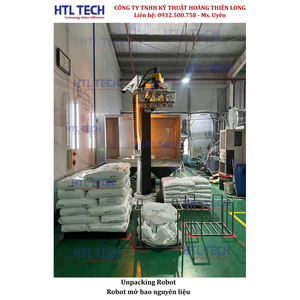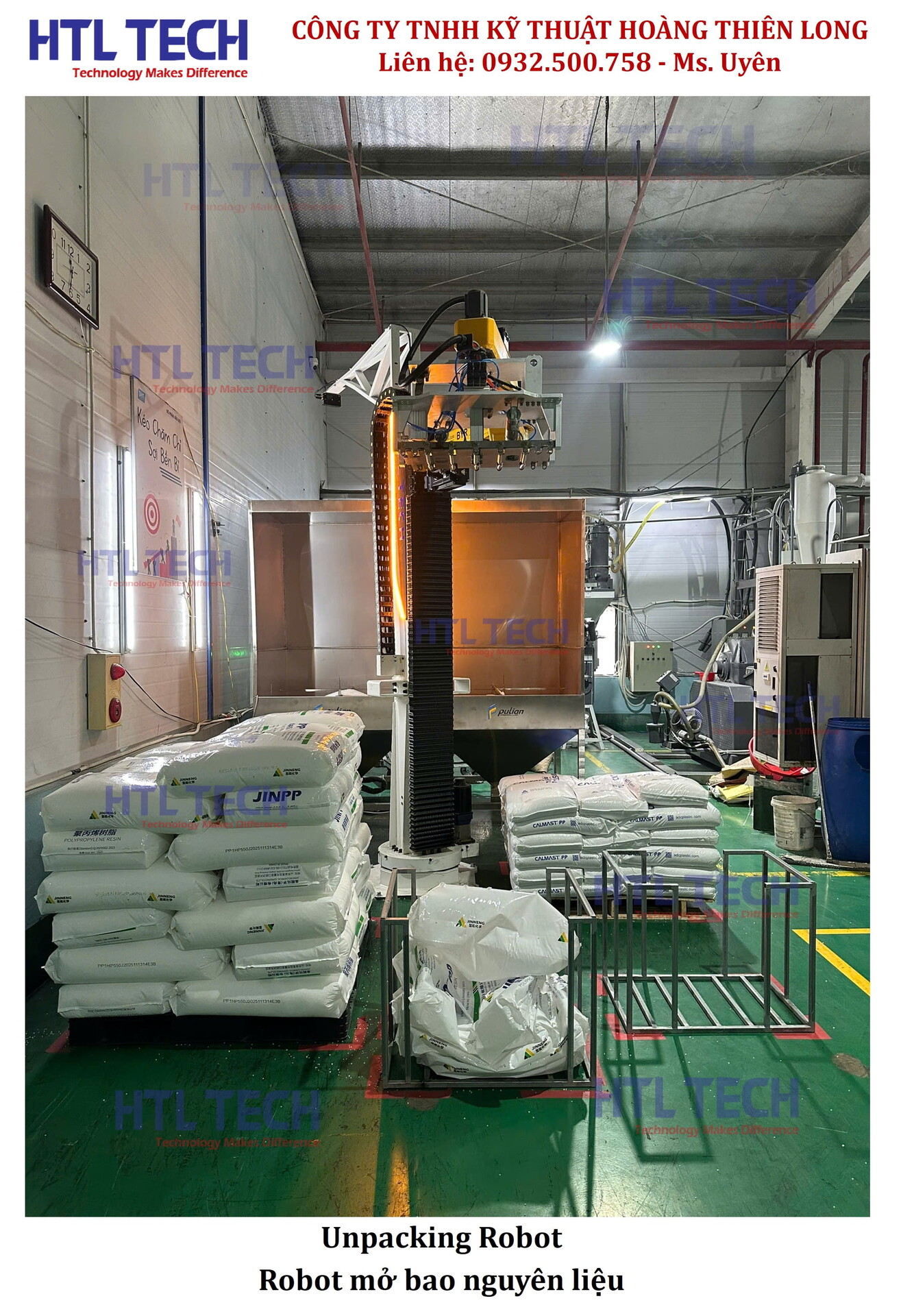
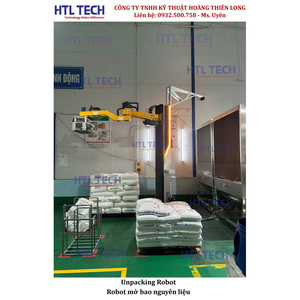
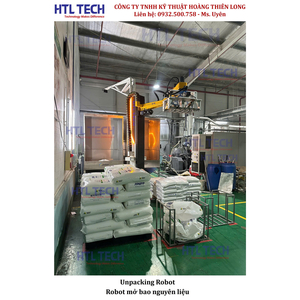
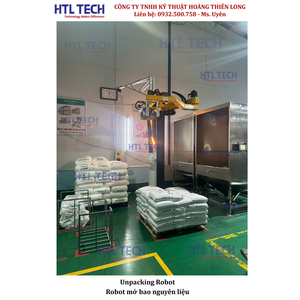
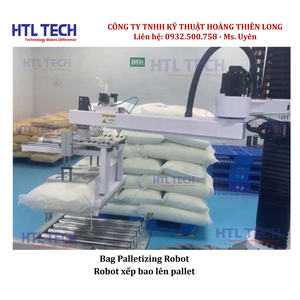
BAG UNPACKING ROBOT FOR MATERIAL HANDLING
HỆ THỐNG ROBOT GẮP XẢ BAO NGUYÊN LIỆU
Improving Material Feeding Efficiency and Workplace - Giải pháp tối ưu hóa cấp liệu và nâng cao an toàn sản xuất
|
In plastic manufacturing environments, particularly in injection molding and packaging production, material handling remains a critical yet often under-optimized process. While production lines have become increasingly automated, manual bag handling and emptying still persists in many facilities. This gap in automation not only limits operational efficiency but also introduces safety risks and inconsistencies in material feeding. As a result, manufacturers across the US and Europe are increasingly adopting robotic bag emptying systems to modernize their material handling processes. |
Trong các nhà máy sản xuất nhựa, đặc biệt là lĩnh vực ép phun và bao bì, công đoạn xử lý nguyên liệu đóng vai trò quan trọng nhưng thường chưa được tối ưu hóa hoàn toàn. Mặc dù nhiều dây chuyền đã được tự động hóa, việc xử lý và xả bao nguyên liệu thủ công vẫn còn phổ biến. Khoảng trống này trong tự động hóa không chỉ làm giảm hiệu quả vận hành mà còn tạo ra rủi ro an toàn và sự thiếu ổn định trong cấp liệu. Vì vậy, nhiều doanh nghiệp tại Mỹ và châu Âu đang chuyển sang sử dụng hệ thống robot xả bao nguyên liệu để hiện đại hóa quy trình sản xuất. |
|
 |
 |
THE PROBLEM WITH MANUAL BAG HANDLING |
HẠN CHẾ CỦA PHƯƠNG PHÁP XỬ LÝ BAO THỦ CÔNG |
|
|
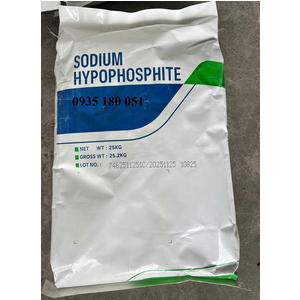
Plastic resins are typically delivered in 25 kg or 50 kg bags. In conventional setups, operators are responsible for:
Although widely used, this approach presents several operational challenges. Manual handling is inherently inconsistent, as it depends on human performance, which can vary across shifts. Over time, fatigue reduces efficiency and increases the likelihood of errors. Additionally, repetitive lifting and cutting tasks expose workers to injuries and safety hazards. Material spillage and dust generation are also common, leading to raw material loss and contamination risks—both of which directly impact production quality and cost. |
Nguyên liệu nhựa thường được đóng trong bao 25 kg hoặc 50 kg. Trong mô hình truyền thống, công nhân phải:
Dù phổ biến, phương pháp này tồn tại nhiều vấn đề. Hiệu suất làm việc phụ thuộc vào con người, dễ bị ảnh hưởng bởi mệt mỏi và sai sót theo ca làm việc. Ngoài ra, việc nâng vác nặng và sử dụng dao cắt tiềm ẩn nguy cơ tai nạn lao động.
Bên cạnh đó, quá trình thao tác thủ công dễ gây rơi vãi nguyên liệu và phát sinh bụi, ảnh hưởng trực tiếp đến chi phí sản xuất và chất lượng sản phẩm. |
|
 |
 |
| WHAT IS A ROBOTIC BAG EMPTYING SYSTEM? |
ROBOT XẢ BAO NGUYÊN LIỆU LÀ GÌ? |
|
|
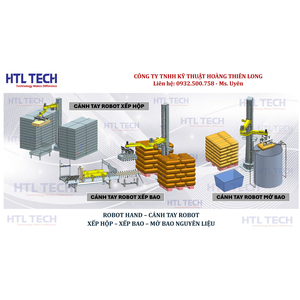
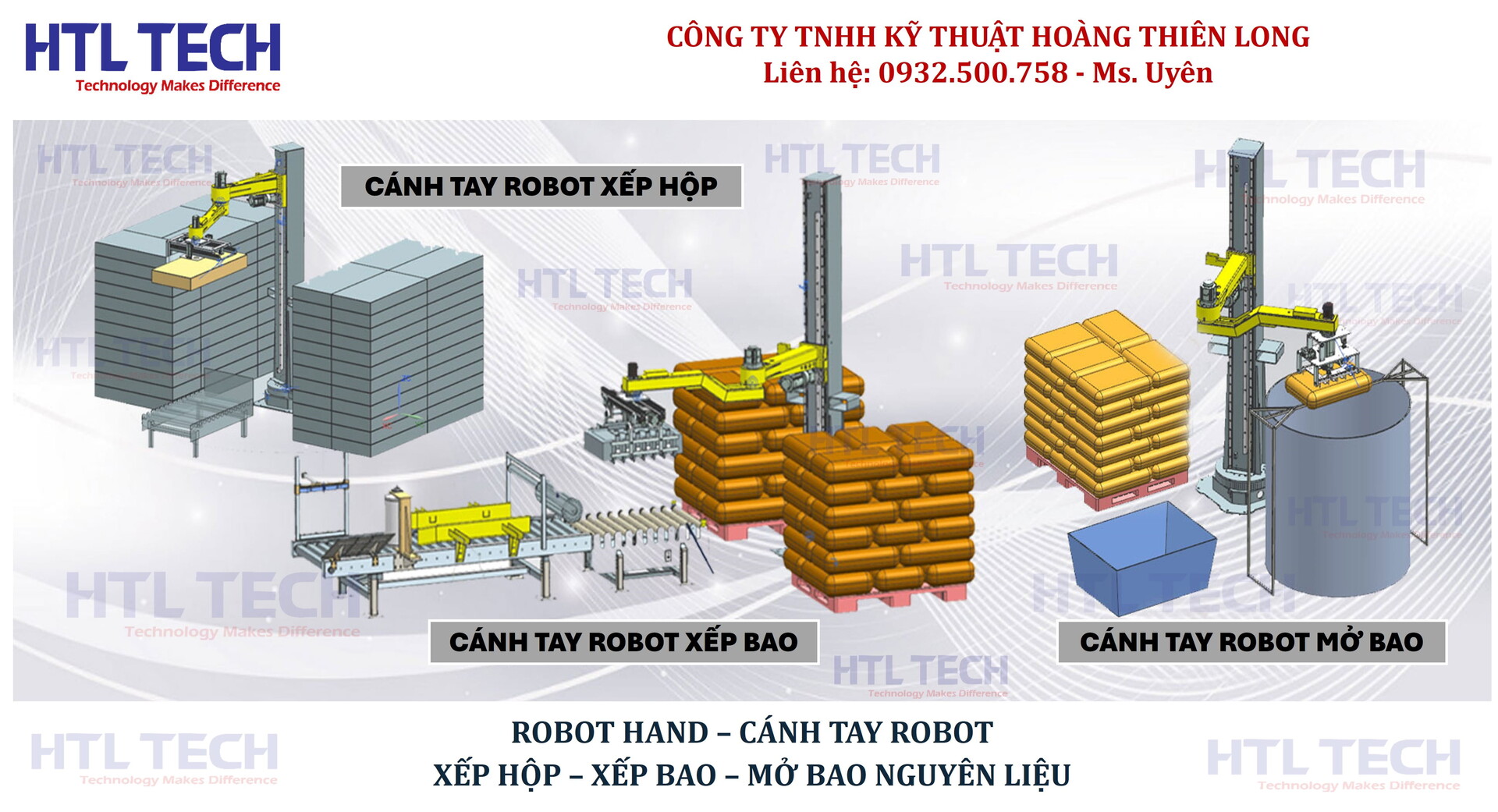
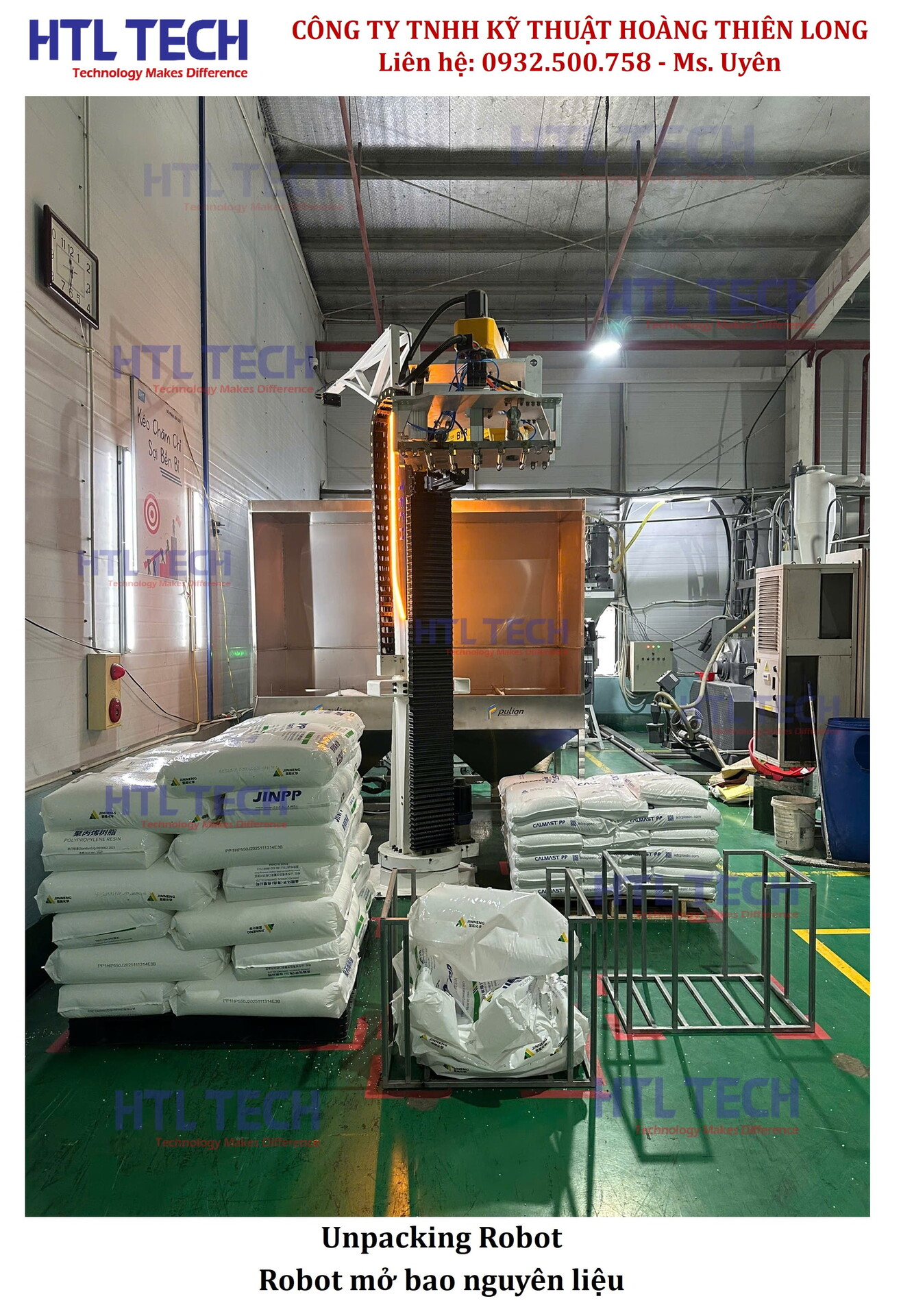
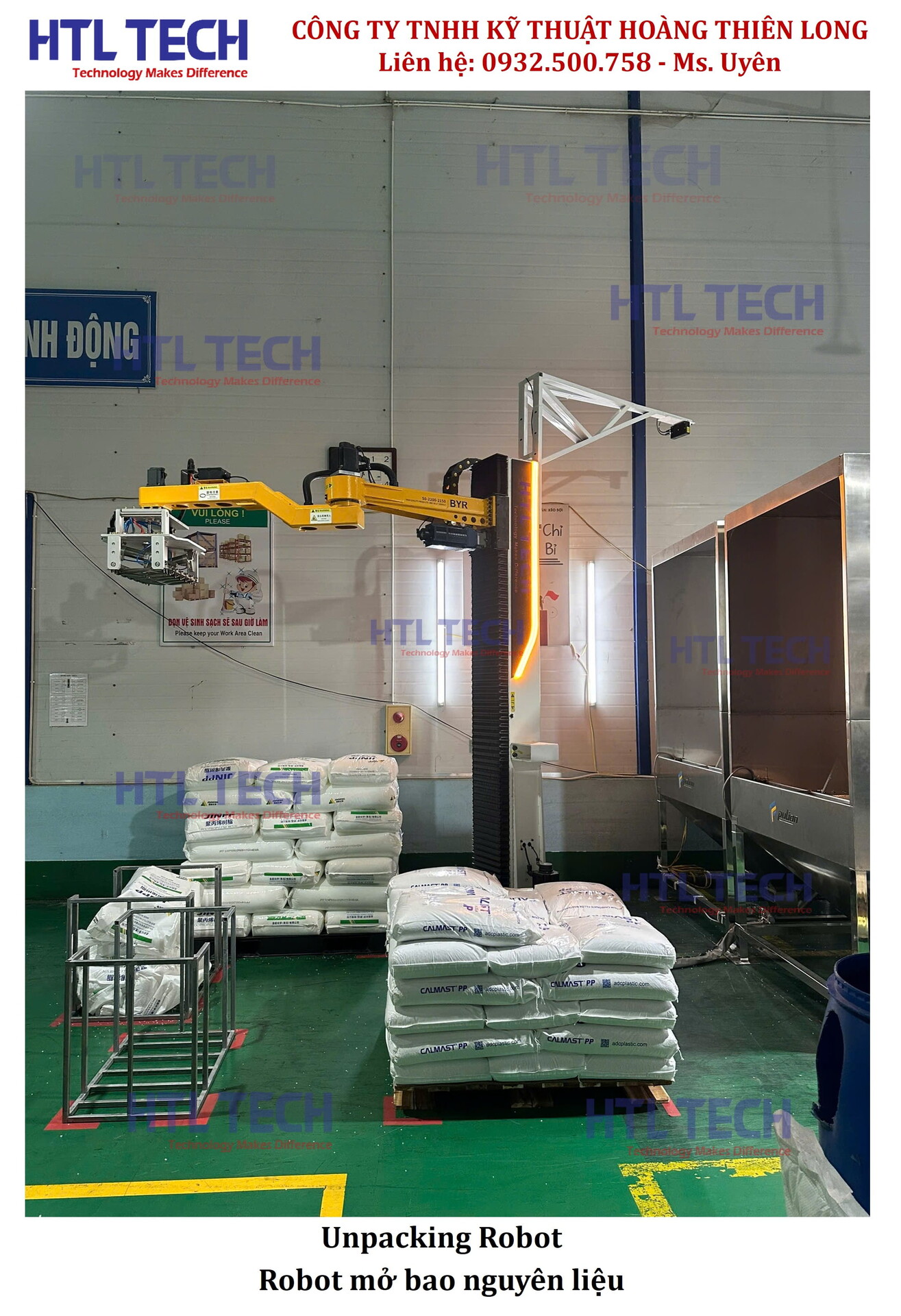
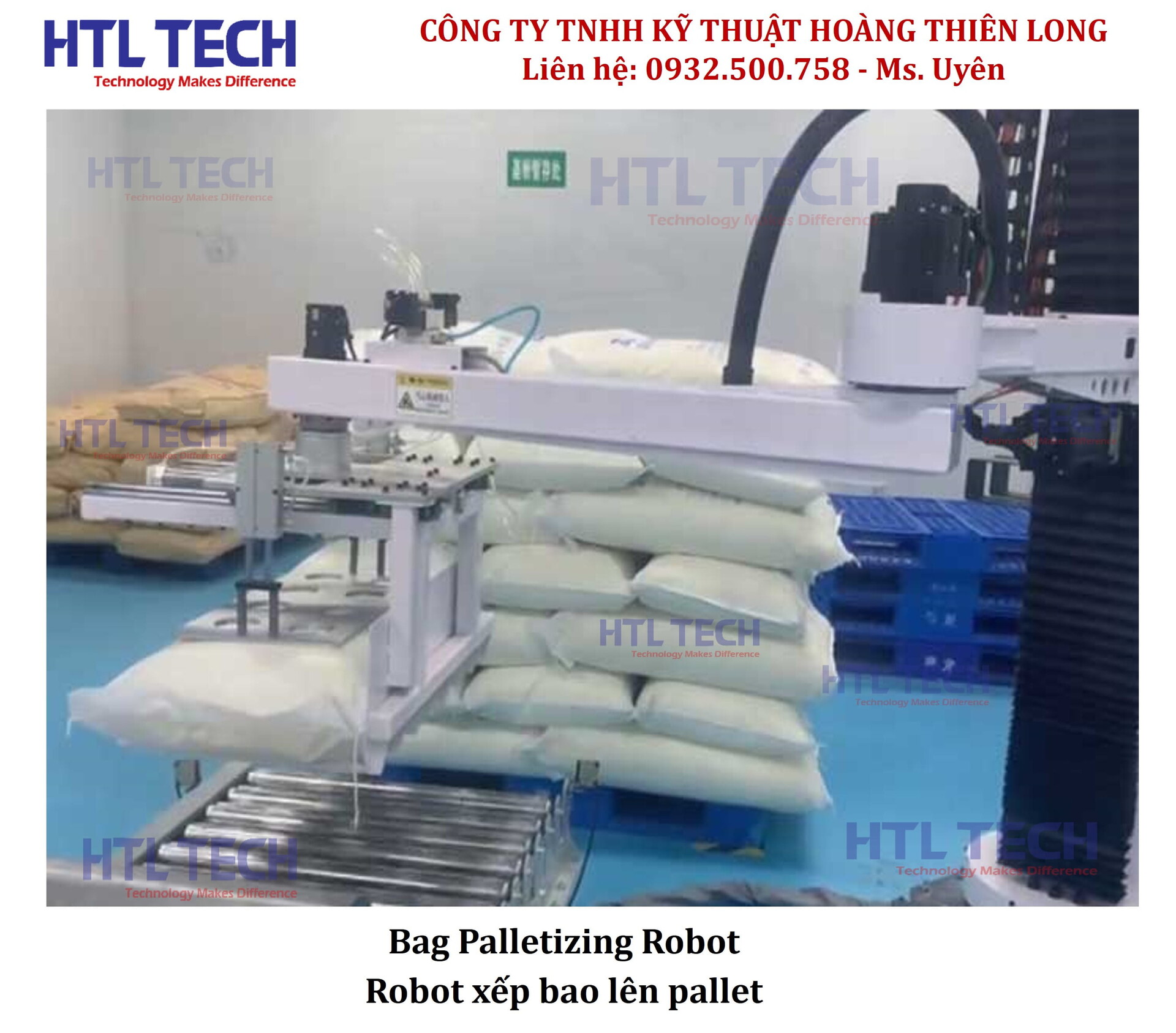
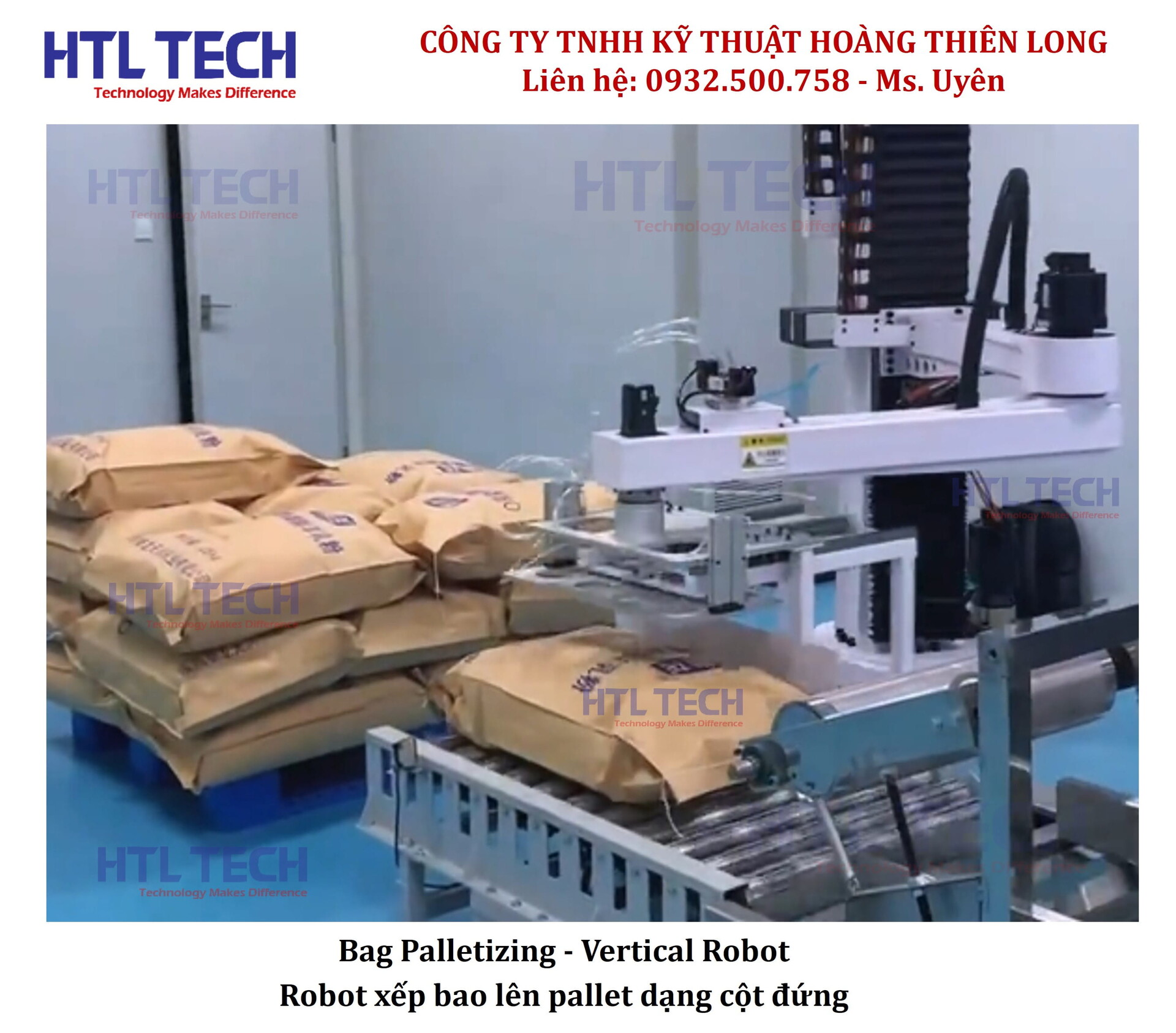
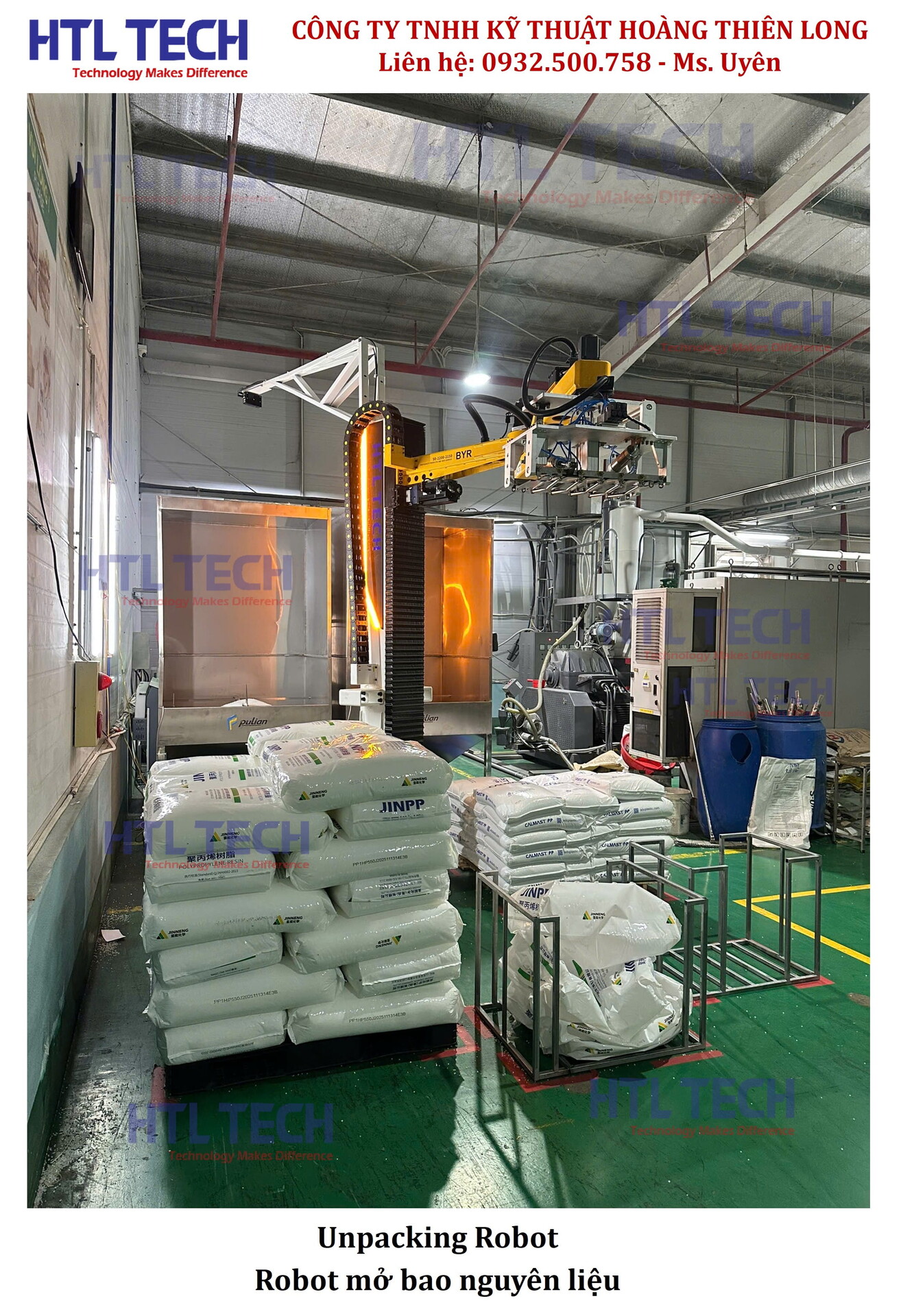
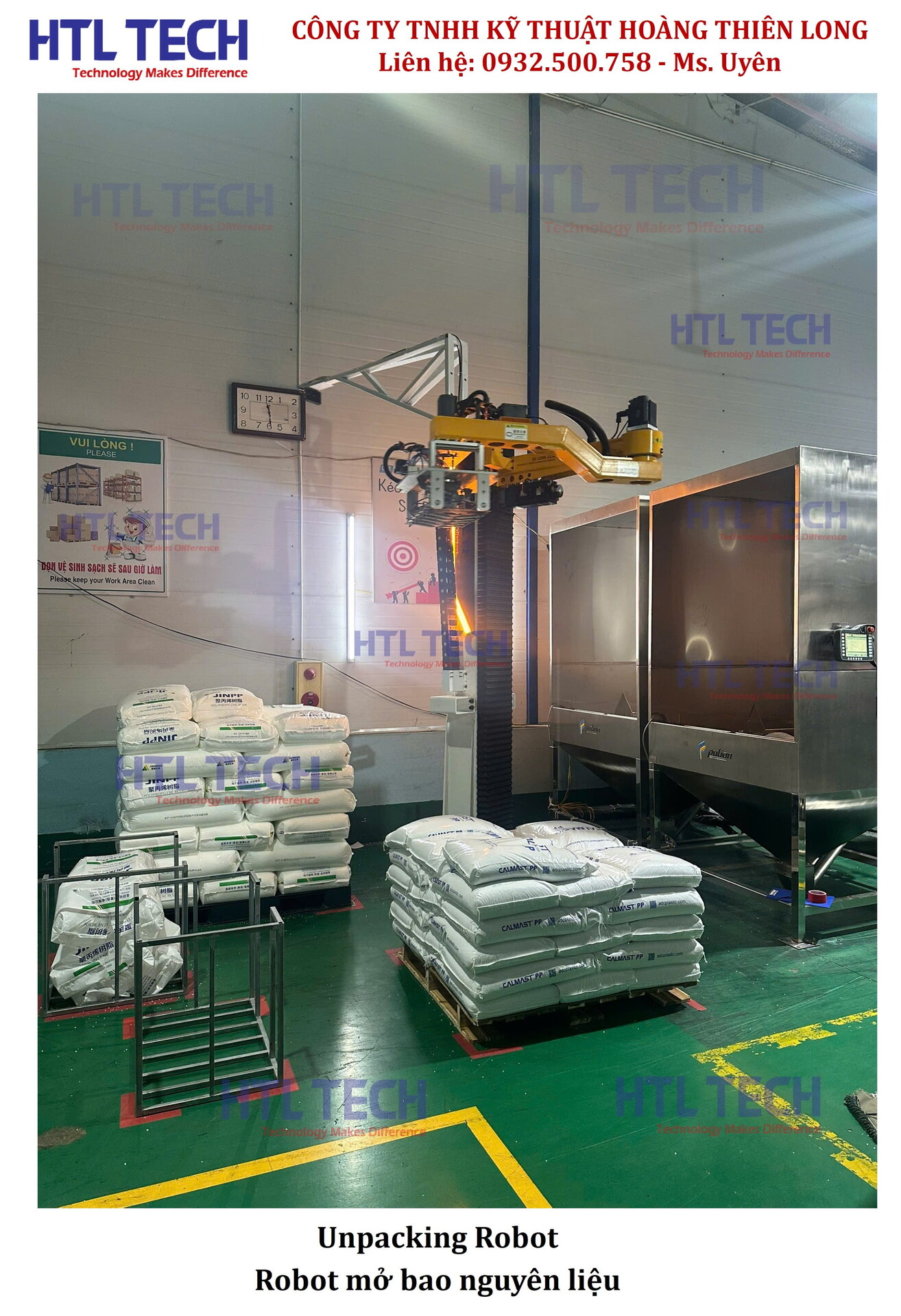
A robotic bag emptying system is an automated solution designed to replace manual bag handling in industrial environments. It typically consists of:
The system operates through a programmed sequence: picking bags from pallets, transporting them to the dumping station, cutting them open, and discharging the material into a controlled environment. Empty bags are then separated and collected automatically, ensuring a continuous and clean workflow. |
Hệ thống robot xả bao nguyên liệu là giải pháp tự động nhằm thay thế hoàn toàn thao tác thủ công trong xử lý bao. Một hệ thống điển hình bao gồm:
Hệ thống hoạt động theo chu trình lập trình sẵn: gắp bao từ pallet, di chuyển đến vị trí xả, cắt bao và xả nguyên liệu vào khu vực kiểm soát. Bao rỗng sau đó được tách riêng và thu gom tự động, đảm bảo quy trình liên tục và sạch sẽ. |
|
 |
 |
KEY BENEFITS OF AUTOMATED BAD HANDLING SYSTEMS - LỢI ÍCH CHÍNH CỦA HỆ THỐNG TỰ ĐỘNG XẢ BAO
1 - IMPROVED OPERATIONAL EFFICIENCY |
1 - NÂNG CAO HIỆU SUẤT VẬN HÀNH |
|
| A single robotic bag emptying system can replace multiple operators per shift. In regions with high labor costs such as the US and EU, this translates into significant long-term savings. | Robot hoạt động với chu kỳ ổn định, liên tục và không bị ảnh hưởng bởi yếu tố con người. Điều này giúp duy trì tốc độ cấp liệu ổn định và loại bỏ điểm nghẽn trong sản xuất. |
2 - REDUCED LABOR |
2 - NÂNG CAO HIỆU SUẤT VẬN HÀNH |
|
| A single robotic bag emptying system can replace multiple operators per shift. In regions with high labor costs such as the US and EU, this translates into significant long-term savings. | Một hệ thống robot có thể thay thế nhiều công nhân mỗi ca. Tại các thị trường có chi phí lao động cao, điều này mang lại lợi ích kinh tế rõ rệt. |
3 - ENHANCED WORKPLACE SAFETY |
3 - TĂNG CƯỜNG AN TOÀN LAO ĐỘNG |
|
| Automation eliminates manual lifting and cutting tasks, reducing the risk of injuries. This is particularly important for compliance with strict workplace safety regulations in developed markets. | Việc loại bỏ thao tác nâng vác và cắt bao giúp giảm đáng kể nguy cơ tai nạn, đáp ứng các tiêu chuẩn an toàn nghiêm ngặt. |
4 - MINIMIZED MATERIAL LOSS AND CONTAMINATION |
4 - GIẢM HAO HỤT VÀ NHIỄM BẨN NGUYÊN LIỆU |
|
| Enclosed dumping stations prevent material spillage and reduce airborne dust. This not only improves material efficiency but also supports cleanroom or high-standard production environments. | Thiết kế xả kín giúp hạn chế rơi vãi và giảm bụi, đảm bảo chất lượng nguyên liệu và môi trường sản xuất. |
5 - SCALABLE INTERGATION WITH SMART MANUFACTURING SYSTEMS |
5 - DỄ DÀNG TÍCH HỢP HỆ THỐNG TỰ ĐỘNG HÓA |
|
|
Robotic bag emptying systems can be seamlessly integrated with:
This integration enables a fully automated material handling process aligned with Industry 4.0 initiatives. |
Hệ thống robot có thể kết nối với:
Từ đó tạo thành quy trình xử lý nguyên liệu hoàn toàn tự động theo định hướng Industry 4.0 |
TECHNICAL CONSIDERATIONS FOR IMPLEMENTATION |
|
CÁC YẾU TỐ KỸ THUẬT CẦN XEM XÉT |
|
When selecting a robotic bag emptying solution, manufacturers should consider:
Vertical (column-type) robots are often preferred due to their compact footprint and flexibility in retrofitting existing facilities. |
Khi lựa chọn hệ thống robot xả bao, doanh nghiệp cần lưu ý:
Robot trục đứng thường được ưu tiên do tiết kiệm diện tích và dễ triển khai trong nhà máy hiện hữu. |
INDUSTRY APPLICATIONS |
|
ỨNG DỤNG TRONG NGÀNH NHỰA |
|
Robotic bag emptying systems are widely used across various sectors within the plastics industry, including:
Their adaptability makes them suitable for both high-volume production lines and specialized material handling operations. |
Hệ thống robot xả bao được sử dụng rộng rãi trong:
Giải pháp này phù hợp cho cả sản xuất quy mô lớn và các ứng dụng chuyên biệt. |
THE FUTURE OF AUTOMATED MATERIAL HANDLING |
|
XU HƯỚNG TƯƠNG LAI CỦA TỰ ĐỘNG HÓA CẤP LIỆU |
|
As manufacturers move toward fully automated and data-driven production environments, robotic material handling systems will play an increasingly central role. The transition from manual to automated bag handling is not just a matter of efficiency—it is a strategic step toward building resilient, scalable, and competitive manufacturing operations. |
Robot xả bao nguyên liệu là một phần trong xu hướng tự động hóa toàn diện. Khi kết hợp với các hệ thống xử lý nguyên liệu khác, doanh nghiệp có thể xây dựng quy trình khép kín, giảm phụ thuộc vào con người. Đây là nền tảng để triển khai nhà máy thông minh trong tương lai. |
CONCLUSION |
|
KẾT LUẬN |
|
Robotic bag emptying systems represent a critical advancement in modern material handling. By eliminating manual processes, improving safety, and ensuring consistent performance, these systems enable manufacturers to meet the growing demands of efficiency and quality. For companies operating in competitive markets, investing in automation is no longer optional—it is essential for long-term sustainability and growth. |
Hệ thống robot xả bao nguyên liệu là bước tiến quan trọng trong tự động hóa sản xuất nhựa. Giải pháp này giúp nâng cao hiệu suất, đảm bảo an toàn và giảm chi phí vận hành. Trong bối cảnh cạnh tranh ngày càng cao, việc đầu tư vào tự động hóa không chỉ là lựa chọn, mà là yếu tố quyết định sự phát triển bền vững của doanh nghiệp. |